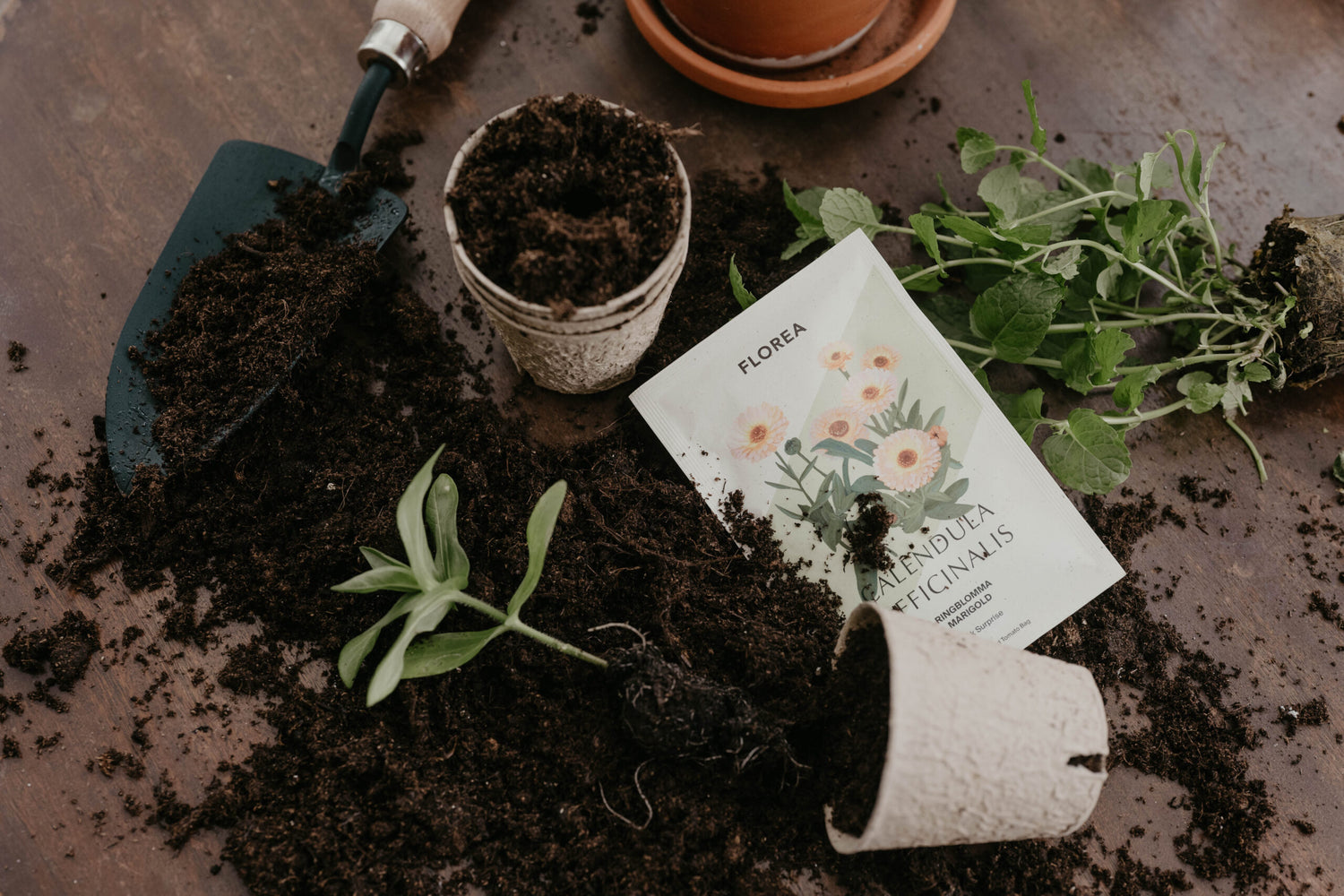
Soil types
Our precious topsoil is a small ecosystem. It contains:
- minerals - particles of clay, sand and gravel
- mulch - decomposed organic matter
- voids - important for transporting oxygen and water, among other things
- small animals and micro-organisms - make the soil fertile and porous.
The two poles of arable soil are clay soil and sandy soil. Depending on the proportions of clay and sand, there are also various mixed soils. Test your soil by picking up a handful from the ground and trying to squish it together. Sandy soil crumbles, but clay soil is malleable and can be rolled into a strand. The narrower the string becomes before it breaks, the higher the clay content of the soil. Both clay and sand have their advantages and disadvantages. Whatever soil you grow in, it is possible to improve it.
Clay soil
Clay soil is so called because it contains a lot of 'clay', that is, the smallest mineral grains. The more of these tiny particles the soil has, the denser it becomes. This density means that clay soils can be hard to work. Packed soil with minimal voids can lead to a lack of oxygen for plant roots. In spring, it takes a long time for the sun to warm up a compact clay soil. But clay soil also has a number of good properties. Because of its density, clay soil is very good at retaining nutrients and water. In the fall, it stays warm longer than sandy soil. Clay soil is also naturally rich in lime. Clay soil can be balanced by adding sand. The sand should not be too fine-grained, as there is a risk that the soil will start to resemble concrete. It is usually recommended to add 5-10 cm of filler sand on top of the soil and to lightly incorporate the sand. Then cover the soil with at least 5 cm of organic material, such as manure or compost. Many root crops like sandy soil better than clay. If you have a heavy clay soil, you can therefore choose to mix in some sand right where the root crops will grow. But this does not apply to turnips - they thrive best in clay soil!
Sandy soil
Sandy soil has larger mineral grains than clay soil. Sandy soil is therefore more airy and permeable. Nutrients and water can leach out of sandy soils, leaving them nutrient-poor and dry. In addition, sandy soil is less rich in lime than clay soil. The advantages of a sandy soil are that it is easy to work. In spring, it warms up quickly. And there is no risk of water standing and damaging plant roots, because it has such good drainage. Sandy soil can be balanced by adding clay soil. It is usually recommended to put about 5 cm of clay on top of the soil and lightly incorporate it. Then cover the soil with at least 5 cm of organic material - for example, manure or compost.
Better soil with more mulch!
Mulch is organic matter that has been broken down. A mulchy soil has a rich texture and a lovely color. Both clayey and sandy soils become better growing soils when the level of mulch increases. Clay soils become more porous and easy to work, while sandy soils retain more nutrients and water. The microlife that gives the soil its mulch needs to be fed continuously. If we are generous as growers in adding organic matter - well, then worms, bugs and microorganisms will be happy. Material that needs oxygen to decompose is added on top of the soil surface. This includes, for example, grass clippings, leaves, leaf litter, weed cuttings and semi-rotted compost. Well manure and compost soil, on the other hand, can be lightly incorporated into the soil. All this is turned into mulch and nutrients in a form that the roots of the plants can easily absorb. No matter what kind of soil we grow in, a well-fed microlife will result in lush vegetation, flowering and harvesting.
Author: Johanna Damm Fact checked by Erik HoekstraLast updated 2022-10-14