
Grow your own food
Why growing edibles is worth it
Home-grown food is good for both health and mood. Freshly picked vegetables have an aroma, a crispness and a sweetness that shop-bought produce rarely matches. Harvesting your own crops also cuts out packaging and pesticides, and it adds to the local food supply.
What should you choose to grow?
If you are a beginner, it is sensible to start with just a few types. Good basic categories are leafy greens, herbs, root vegetables, onions, brassicas, legumes, tomatoes and cucurbits.
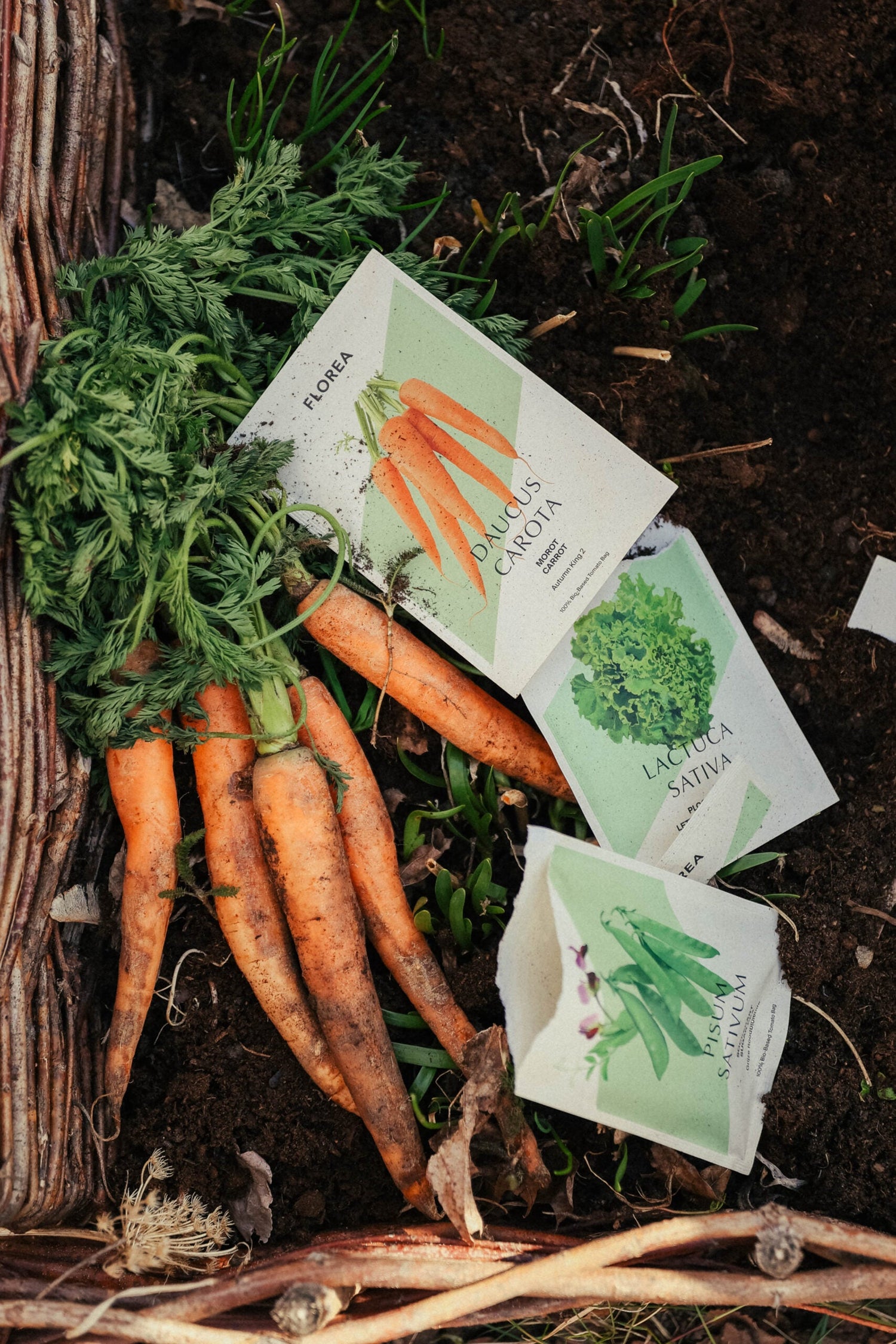
Growing your own also lets you find varieties that rarely reach the shops. Perhaps you want to sow carrots, but pick a white or purple variety? Or add purple basil to the herb bed? It is worth browsing the seed range and finding something that appeals a little extra.
Once you are up and running, try at least one new plant every year. Baby corn, aubergine or Asian leafy greens? Before long you will be standing there with seventeen kinds of tomato and a smile on your face, ready to learn how to inoculate logs with edible mushroom spawn.
Harvest all year round
The growing season across the UK and northern Europe is warm but short. Anyone who wants to be more self-sufficient in vegetables can find ways to stretch it at both ends.
- Plan the kitchen garden with the harvest in mind. Fast crops can be sown in several rounds, for example spring onions, sugar snap peas, radishes and leafy greens. Sow both early and late varieties. Thinning harvests work well, which means picking small beetroot, parsnips and the like to make room for the rest of the plants.
- With a cold frame or greenhouse you can sow earlier in spring and harvest later in autumn.
- In late summer it is time to sow frost-tolerant crops such as winter lettuce and Asian leafy greens. Some tolerate several degrees below zero and give a harvest long after the rest of the garden has gone dormant.
- Autumn and winter sowing of next year's vegetables gives the seed a running start in early spring. Try spinach, lettuce, carrot, parsnip or cabbage.
Grow edibles indoors
Picking food straight from the windowsill is about as convenient as it gets. An indoor crop can yield a surprising amount, and the kitchen becomes a nicer place to be when something is green and growing in every corner.
Microgreens such as watercress, lettuce and kale do well on a windowsill. Herbs give plenty of flavour and nutrients. And a couple of garlic cloves in a pot produce aromatic green tops to snip fresh into your cooking.
Cucumber is another kitchen crop worth trying indoors. We sow it on the windowsill in January and harvest from April. With supplementary lighting the plants do noticeably better.
Shoots and sprouts are tasty and packed with vitamins. They only need light at the end of the growing period. Easy shoots include sunflower, amaranth, buckwheat and pea. Popular sprouts are mung bean, lentil, broccoli, radish and alfalfa.
Make the most of the harvest
- Store cool
Fill the freezer with blanched vegetables, parsley, dill and basil. Potatoes, root vegetables, onions and cabbage keep in a cool cellar. Winter squash, with its dense flesh and hard skin, often lasts several months. Many root vegetables can stay in the ground over winter until the frost lifts. Jerusalem artichoke, parsnip and carrot keep their texture well, especially if you cover the soil with leaves or straw.
- Dry
Beans and peas are easy to dry, and so are tomatoes and herbs. Courgette and kale make good crisps. Dried apple rings taste very good, especially with a generous amount of cinnamon.
- Preserve, juice & ferment
Juice, jam and marmalade look good in a row of bottles and jars in the pantry. Play with flavour contrasts such as chilli or ginger.
Lacto-fermentation has had a well-deserved revival. It is a good way to use up white cabbage, carrot, beetroot and cucumber, and the lactic acid bacteria do the gut flora a lot of good.
Author: Johanna Damm
Fact-checked by Erik Hoekstra
Last updated 2022-10-14