
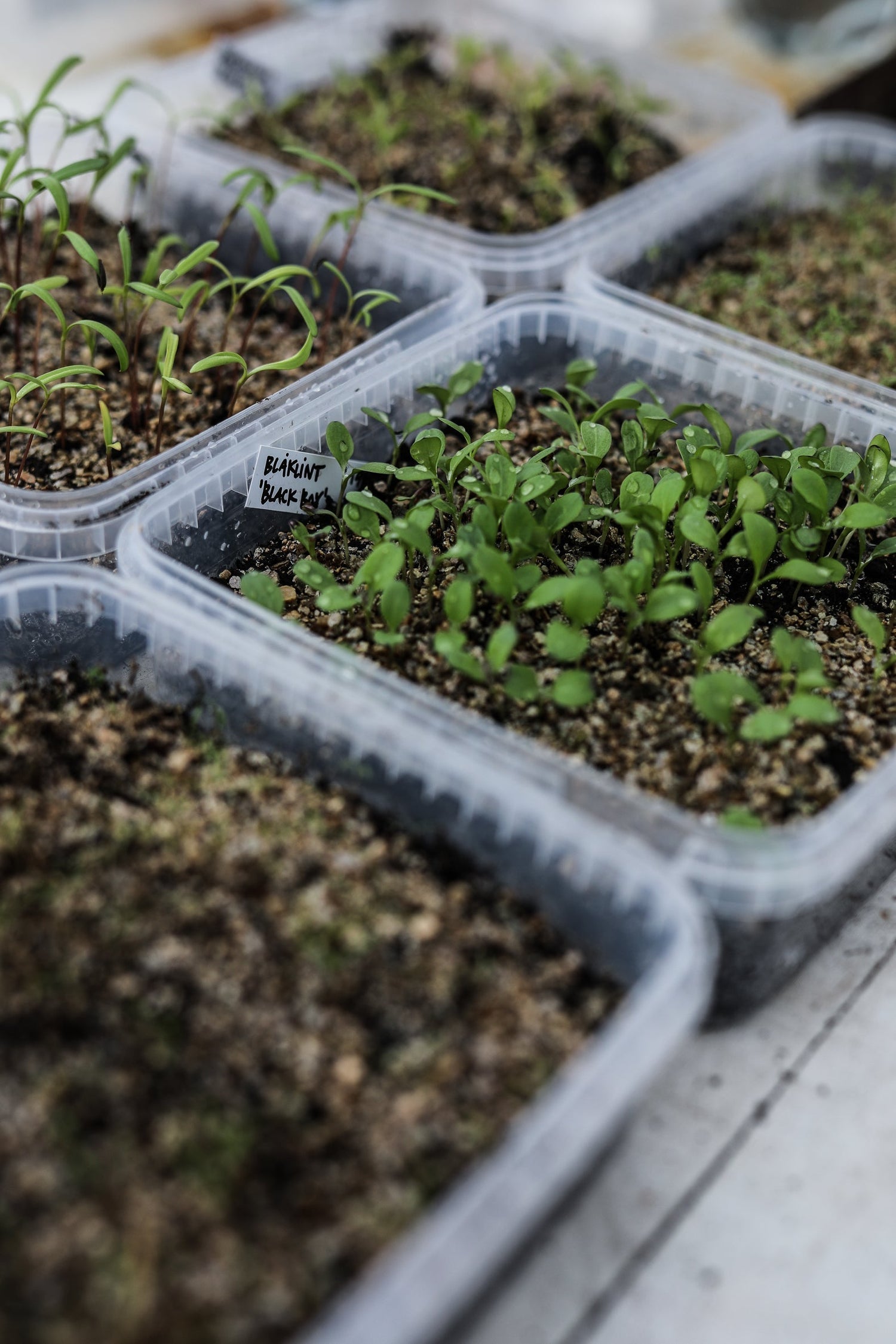
Making use of winter to start sowing is a smart and time-efficient approach. Winter sowing means imitating nature’s own way of self-seeding. In other words, if a plant is left in place, forms a seed pod and then drops its seeds to the ground, they end up in the soil and lie there through winter, waiting to “wake up” when the soil is warm enough and the light is sufficient. Winter sowing follows the same process, the difference is that you can organise the sowing yourself and choose exactly how much of each variety you want in a given spot. You can also choose varieties that are especially cold-tolerant and fast-growing for an earlier harvest. With this method, there’s no need for hardening off, extra lighting or heat.
A common way to winter sow is to use a clear plastic sweet box. It works like a mini greenhouse and protects the seedlings from harsher outdoor conditions while allowing them to acclimatise to the cold and sunlight. Winter sowing is both simple and effective and takes up very little space, a clever growing method that we at Florea really like and warmly recommend.
Who is winter sowing for?
For anyone who wants to grow a lot, or who doesn’t have space to start plants indoors. Because the boxes are stored outdoors and can be stacked on top of each other, they take up very little space.
Which annual flowers can be winter sown?
Queen Anne’s lace, cornflower, tall verbena, strawflower, chamomile, nasturtium, snapdragon, ornamental grasses, delphinium, calendula, cosmos, salvia, annual baby’s-breath, sunflower, Ammi, California poppy, marigold (Tagetes), toothpick weed (Ammi visnaga) and poppy are a few varieties that work brilliantly for cold sowing.
Which vegetables and herbs can be winter sown?
Lettuce, cabbage/kale, rocket, spinach, sugar snap peas, radish, spring onions, dill, chives and parsley are all excellent for cold sowing.
How do I get the sweet boxes?
Our best tip is to ask at your local supermarket, in most places these boxes are discarded regularly. Around holidays such as Halloween, Christmas and Easter, there are usually plenty of them because more sweets are sold then.
How do I prepare the boxes?
Drill a few holes in the bottom so the sowings can drain properly. Also drill a few air holes in the lid or along the sides to prevent the box from getting too hot. Fill the box with compost and water it thoroughly. The final step is to sprinkle a thin layer of seed compost on top and sow the seeds at the correct depth. This varies a lot between varieties, so be sure to check the sowing depth on the seed packet. Don’t forget to label the box with the variety name and date! Finish by adding a layer of snow over the sowing if there is any outside, otherwise water is fine.
What do I do with the boxes once they’re filled?
Once the sowing is done, place the box outdoors in a sheltered position. Choose a spot where the sun won’t scorch it or where it won’t get far too much rain. Keep an eye on the boxes at first if it’s very cold, ideally once a week. The seeds will then germinate when the timing is right for them, which can vary depending on your growing zone.
What do I do once seedlings start growing in the boxes?
When the first cotyledons (seed leaves) start to appear, it’s time to remove the lid. Keep watering so the compost doesn’t dry out and make sure the boxes are in a bright position. Once the seedlings have grown a bit, it’s important to monitor outdoor temperatures. If frost is forecast, it can be a good idea to bring them in or cover the boxes with horticultural fleece or blankets for protection.
How long can the plants stay in the box?
When the box starts to feel crowded and the roots are taking up a lot of space, it’s time to prick out the seedlings into their own small pots with fresh, nutrient-rich compost so they can grow on further. Some varieties grow faster than others, so it’s important to keep an eye on your sowings. Good luck!
Author: Johanna Damm
Fact-checked by Emma Vogiatzi, gardener
Last updated: 2026-01-13