
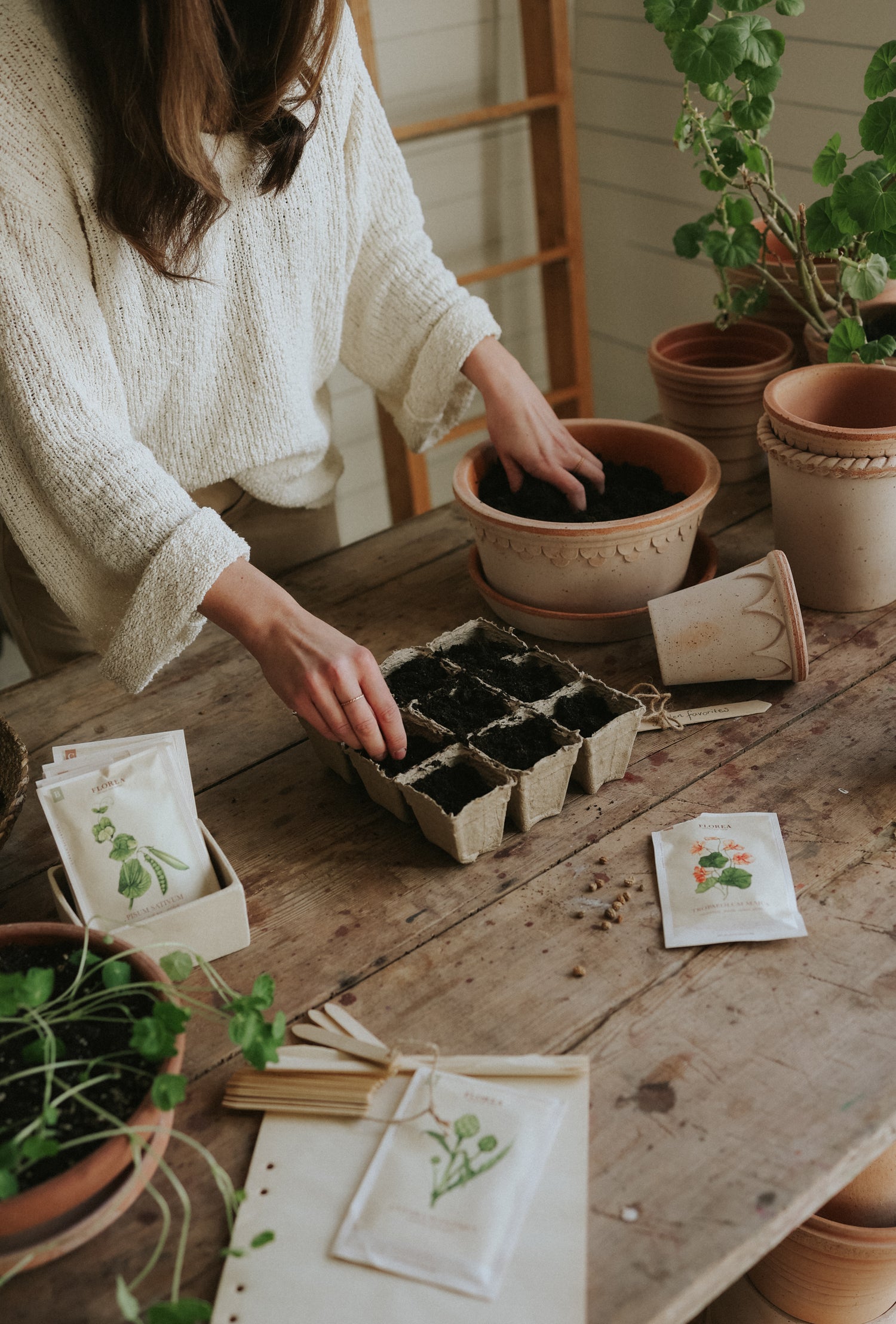
Gardening School
Articles with tips, advice, and lots of inspiration in gardening
Here we share tips, advice, and inspiration about cultivation from all the experience we have at Florea and our ambassadors. When it comes to cultivation, you never really stop learning, it’s always a fantastic journey for new experiences. One year, spring comes early, the next it arrives late, the third year there are extra many killer slugs, and the fourth year we get no rain. What we’re saying is that no year is the same as the other, and growing zones don’t have to be set in stone.
Our motto is that a seed always wants to sprout and it’s okay if you fail. Even the most experienced do not always succeed with their cultivation, and that’s how it will always be. Sometimes, it’s not the result that’s most important, but the journey there. Welcome to read our articles to get tips, advice, and also be inspired about what new things you should try this year?
Grow redcurrants
Redcurrants carry their crop on wood that is several years old and are pruned the opposite way to blackcurrants. The article covers building the framework, training against a wall, choosing a variety, picking time and why the jelly sets without added pectin.
Grow garden phlox
Garden phlox is a perennial that reaches 80-120 cm and flowers from July to September. Here you learn how to keep powdery mildew away with thinning and watering at the root, how to extend flowering and why self sown seedlings never come true to the cultivar.
Grow clematis
The pruning group decides when you may cut your clematis, and the planting depth decides whether the plant survives clematis wilt. Here is the table for groups 1, 2 and 3, the right depth in cm and the right kind of climbing support.
Grow Annabelle hydrangea
Annabelle hydrangea flowers on new wood, unlike bigleaf hydrangea. That decides how you prune it and why it copes with hard winters. Here you get pruning heights and a comparison of three hydrangea species.
Planting hornbeam
Hornbeam is the toughest of the deciduous hedges you can clip and copes with heavy, seasonally wet clay where beech gives up. Plants per metre, cutting at the end of June and why the brown leaves only stay put on a hedge that is cut.
Grow butterfly bush
Butterfly bush flowers on the current season's growth, which makes the hard April pruning decisive. You get the measurements, a variety table with height and flower colour, and an honest account of how much seed the shrub sets.
Spider plant care
Spider plants are easy to keep but brown at the leaf tips. Here are the causes in order, how to water for the water storing root tubers, why the runners fail and how to propagate the plantlets.
Grow columbine
Columbine seed only germinates after a period of cold, which is why sowing indoors in spring rarely works. Here are the sowing times, five species compared, the tricks for keeping one variety true and the care the plant needs after flowering.
Pruning apple trees
Apple trees are best pruned from July to September. The tree then answers with calm growth instead of water shoots. The cut goes just outside the branch collar, thick branches come off in three steps and no more than a fifth of the crown a year.
Grow winter radish
Winter radish is sown in midsummer, the opposite of the radish. Here you get the right sowing time, the difference between daikon and black radish, and how to store the roots in sand for the winter.
Grow swede
Swede, or rutabaga, is sown later than almost anything else in the vegetable garden, and that is why it so often fails. Here you get the right sowing time and spacing, the protection against pests and how to store the roots until spring.
Grow catnip
Only one of the two species makes a cat roll around. Here is the difference between catnip and catmint, how to sow the seed and why a third of all cats do not care at all.
Grow soapwort
Soapwort smells strongest in the evening and foams in water. Here you get the difference between the tall and the low species, how to keep it in place and why the wash water should never be rinsed into a watercourse.
Grow St John's wort
True St John's wort is a meadow plant that bleeds red when you squeeze a bud. Here is how to tell it from the ornamental species, how to sow and harvest it, and what to know before you use it.
Grow marigolds
Marigolds flower from June to frost and are among the easiest annuals to raise from seed. Here is the difference between the species, what is actually true about nematodes, and which varieties you can eat.
Grow broad beans
The broad bean is not a bean but a vetch, and it takes frost. Here is sowing as early as March, the pinching out that stops blackfly, and the test that shows when the pods are ready.