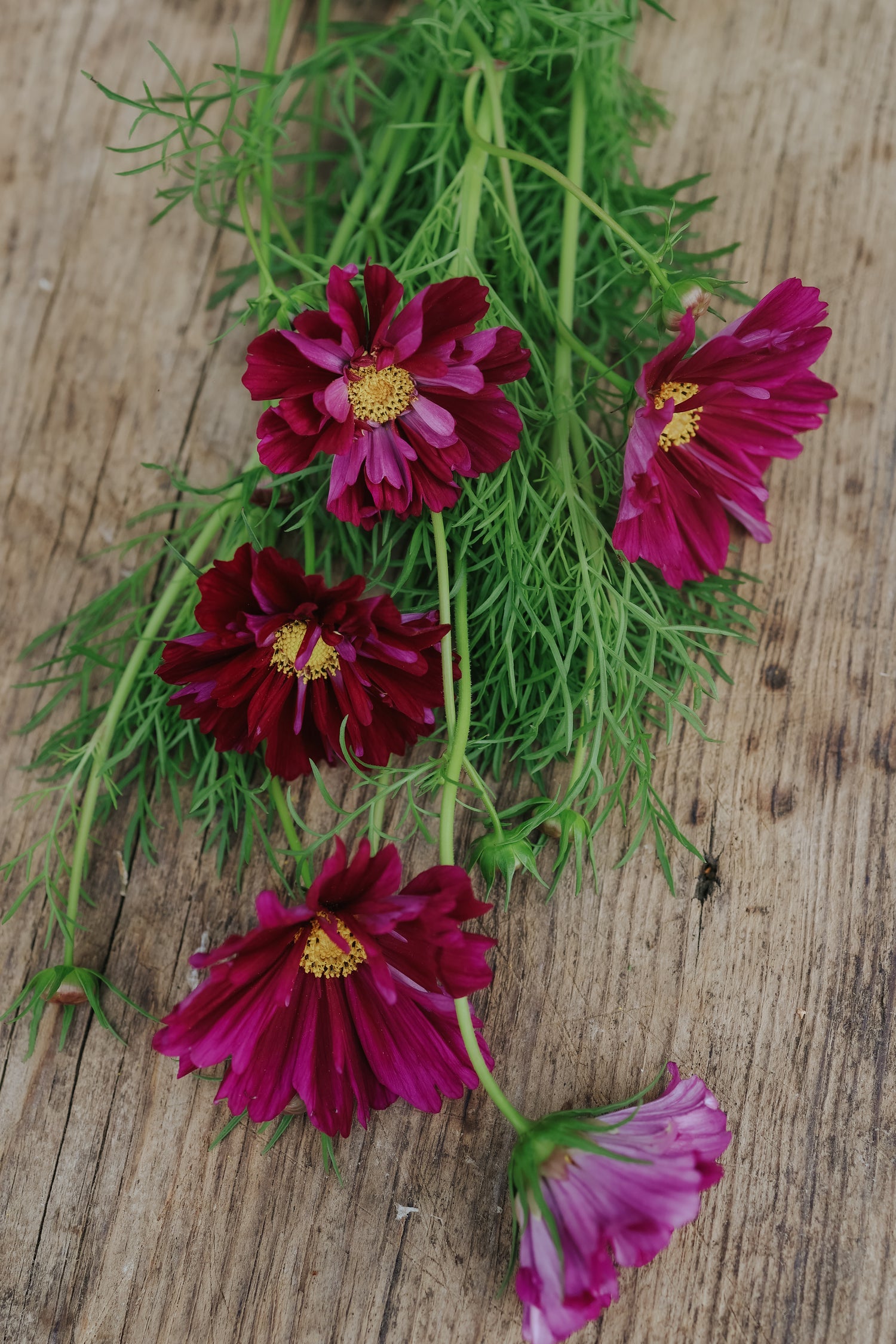
Did you know that the Cosmos flower originally comes from Mexico? The Spaniards were the first to bring it to Europe in the 16th century, and it was cultivated for a long time in monastery gardens.
Like many other popular flowers, the variety of Cosmos has been experimented with and bred into several different shapes and colours. Today, there are both single and double Cosmos in several different shades. There are low varieties that reach about 30-40 cm in height and are suitable for pots. The taller varieties, which are better for cutting, can grow up to 100 cm high.
The large flowers make Cosmos a very popular attractant for all our different pollinators such as butterflies and bees.
Cosmos is an annual flower and not a perennial.
If you want early blooming Cosmos, you should pre-grow it indoors from February to April.
Sow indoors in seed soil from March to April (the variety can also be sown directly on the planting site once the soil has warmed up and can be worked, but then it will flower slightly later). Cover the sowing with a transparent cover with air holes. When the seeds have sprouted, the sowing should be kept cool and as bright as possible for the best results.
To get many beautiful flowers, the plants need to be topped. This is done to stimulate the plant to produce more side shoots, which means more buds and flowers. A tip from us is to top or cut it just above the second or third pair of leaves!
The plants are transplanted after hardening off and when the risk of frost is over. Choose a sunny location for the best bloom, but the variety can also grow in partial shade. Cosmos thrives best in rich, sandy soil without too many nutrients. If it gets too many nutrients, it will develop a lot of foliage but unfortunately very few flowers.
Cosmos is extra sensitive to cross-pollination, and Cosmos flowers always tend to revert back to their original colour if they have been bred into another colour. So don't be surprised if it shows up in a different colour.