
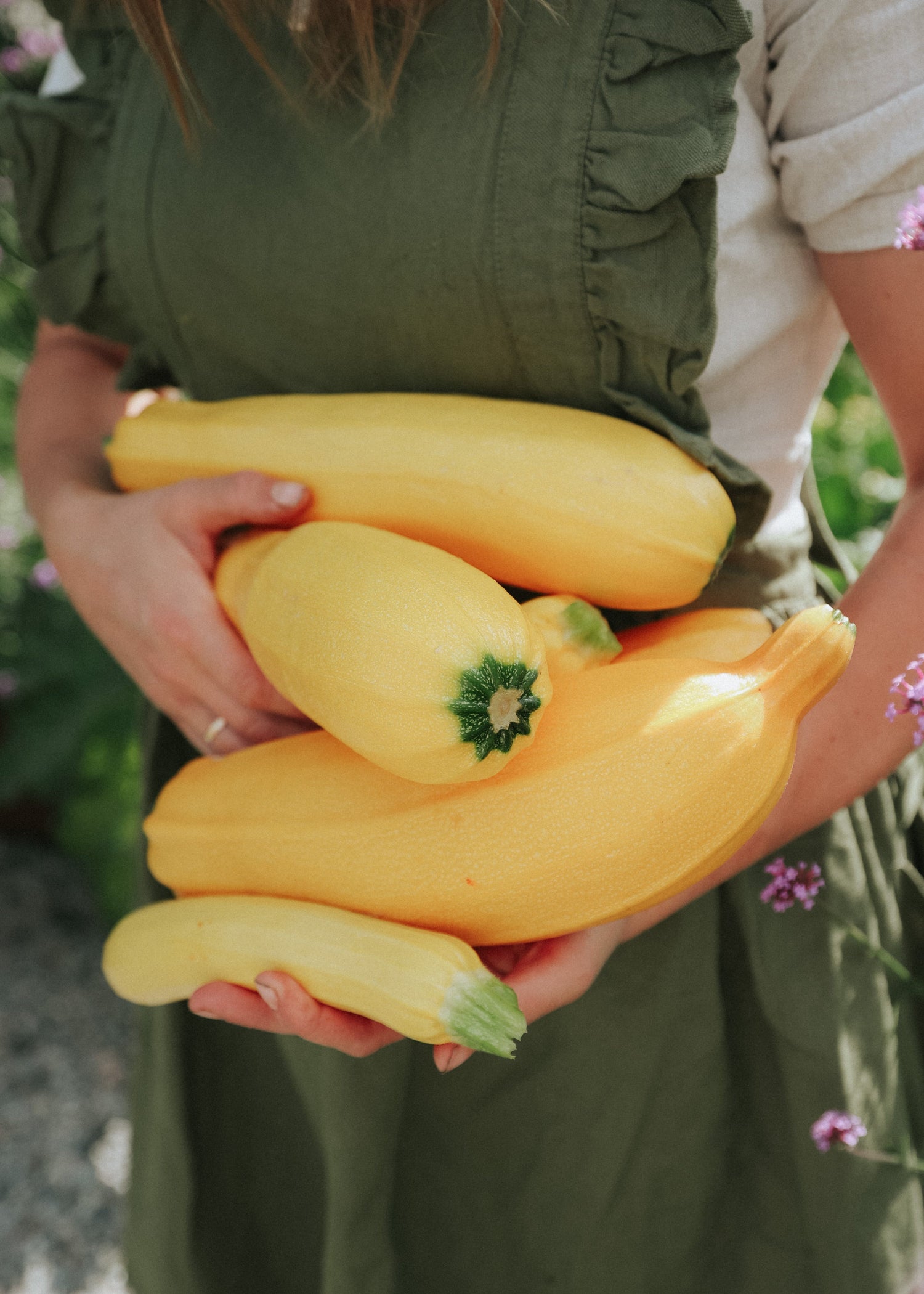
Courgettes are one of the most rewarding vegetables to grow in the garden. They belong to the squash family (the same family as pumpkins and cucumbers) and originate from the Americas, but spread and became popular in Europe via Italy. Courgettes – also known as zucchini – are summer vegetables with a mild flavour that can be used in a wide variety of dishes. Thanks to their versatility and generous yields, courgettes are a favourite among both beginner and experienced gardeners.
Growing courgettes – from seed to plant
Growing courgettes is relatively easy and very rewarding. A few basic factors are key to success: choosing the right location, preparing suitable soil, careful sowing, regular watering, appropriate feeding and ongoing care. Below we guide you through each step:
Location:
Choose a sunny, sheltered spot for your courgette plants. Courgettes love warmth and thrive in full sun. Make sure there is plenty of space – allow at least 1 square metre per plant – as they spread out with large leaves and trailing growth.
Soil:
Prepare a nutrient-rich, humus-rich and well-drained soil. Mix compost or well-rotted manure into the bed before planting, as courgettes are heavy feeders. Loose soil that retains moisture without becoming waterlogged gives plants the best possible start.
Sowing:
Courgettes can be sown directly outdoors once the risk of frost has passed and the soil has warmed to at least 15 °C. However, it is often better to start them indoors. Sow seeds in small pots with seed compost in April or early May. Keep the soil moist and warm (around 20 °C) until germination. Once the plants have developed a few leaves and outdoor temperatures are suitable (usually early June), plant them outside in beds or large containers. Remember to harden off the plants gradually before planting out.
Planting:
Space plants well apart (about 80–100 cm) to avoid competition. Plant them at the same depth as in the pot – do not bury the stem, as it is sensitive to rot. When growing in containers, choose large pots (at least 10–20 litres per plant) with drainage holes.
Watering:
Courgettes require plenty of water. Water regularly and generously, especially during warm periods. Keep the soil evenly moist but avoid waterlogging or letting it dry out completely. Water at the base of the plant and avoid wetting the leaves to reduce the risk of powdery mildew.
Feeding:
As a nutrient-demanding crop, courgettes benefit from regular feeding. Add compost or organic fertiliser at planting and top up during the summer with liquid feed or nettle tea. Consistent feeding supports continuous fruit production.
General care:
Once established, courgettes grow quickly. Keep the area weed-free and mulch with grass clippings or straw to retain moisture and keep fruits clean. Removing the oldest leaves improves air circulation and gives fruits more space. Watch out for slugs and other pests and remove them as needed. With sufficient water and nutrients, courgettes are generally robust and trouble-free.
Harvesting courgettes – when and how
Courgettes grow quickly and usually start producing mid-summer. After pollination, fruits can reach harvest size within just a few days.
Best size for harvest:
For the best flavour and texture, harvest courgettes when they are about 15–20 cm long. Smaller fruits (around 10 cm) are particularly tender and ideal for salads or light cooking. Larger fruits develop tougher skins and woody seeds.
Harvest frequently:
The more you harvest, the more fruit the plant produces. Check plants daily or every other day during peak season, as courgettes grow rapidly in warm weather.
How to harvest:
Use a sharp knife or secateurs to cut the fruit from the plant just above the stem. Handle fruits gently to avoid damage.
After harvest:
Store courgettes cool if not used immediately. They keep well in the fridge for up to two weeks. Courgette flowers are also edible, but leave most on the plant to develop into fruit.
Author: Emma Vogiatzi
Fact-checked by: Erik Hoekstra
Last updated: 13 November 2025