
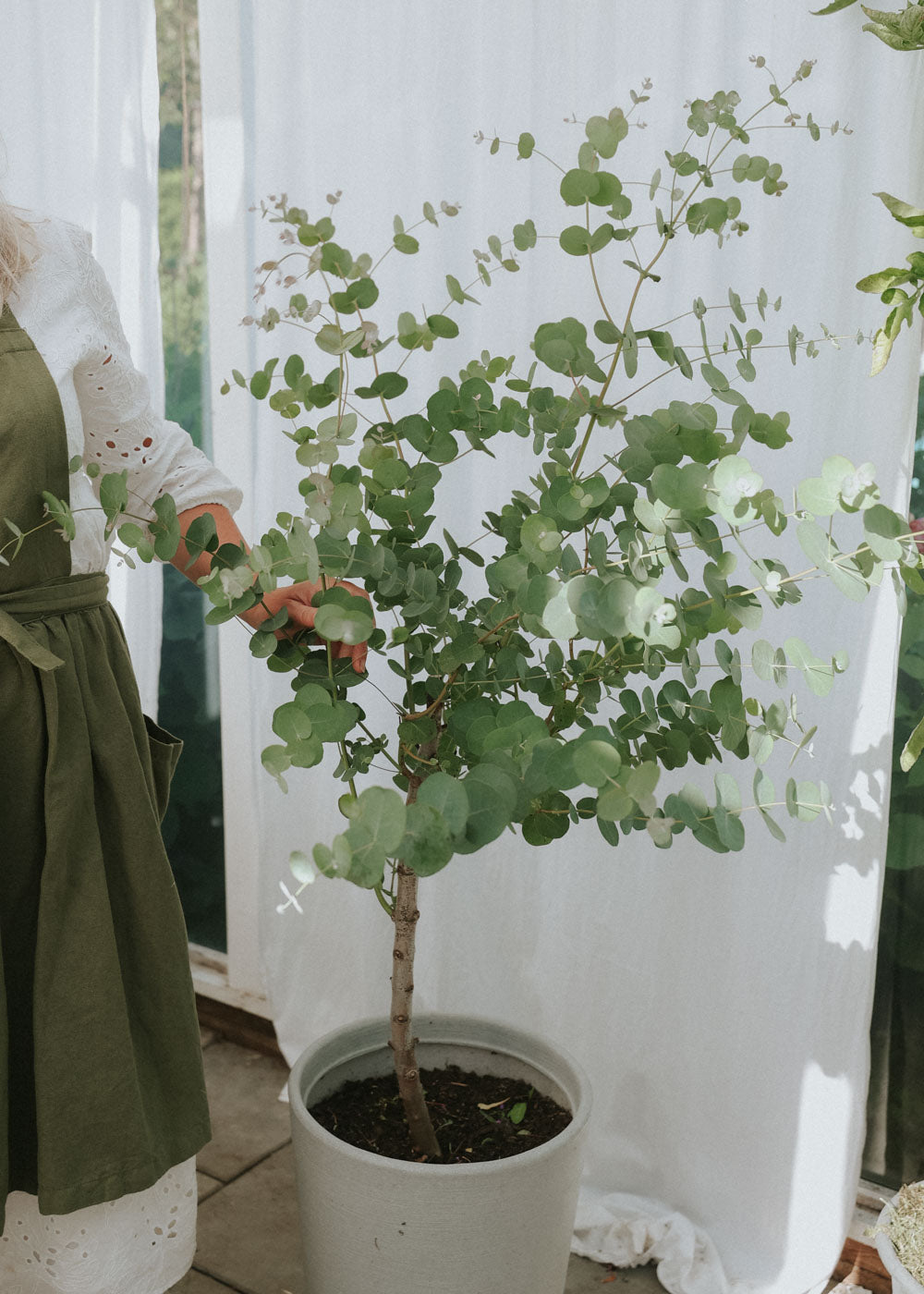
Eucalyptus is an elegant and aromatic plant that has become a favourite among hobby gardeners. The silvery-green leaves spread a lovely scent and are beautiful to use in bouquets all year round. Although eucalyptus in the wild can grow into large trees in Australia, you can successfully grow smaller specimens at home in a pot or garden. Here you’ll find a guide that step by step takes you through the whole process – from sowing seed to how you overwinter your eucalyptus in the Swedish climate.
Sowing – from seed to plant
To get a strong eucalyptus by summer, you need to start early in the year. Follow these steps to succeed with sowing:
Timing: Start pre-growing eucalyptus indoors already in December, January or February. The long development time means that an early start gives plants that have time to become well grown by summer. (It is possible to sow as late as March–April, but then the plants are usually smaller the first year.) You can sow eucalyptus all year round indoors under grow lights if you want it as an indoor potted plant.
Seed compost and containers: Fill small pots or seed trays with fine seed compost that is free-draining. The seed compost should be moist but not soaking wet. Preferably use containers with drainage holes. The best is to sow 1 seed per small pot or several in a seed tray.
Sowing depth: Place the seeds shallowly on the surface of the compost and cover them only very lightly with a thin layer of compost or vermiculite (about 0.2 cm).
Temperature and moisture: Cover the pot with cling film or a mini greenhouse with air holes to retain moisture. Place the sowings at room temperature, about 20–22°C. Keep the compost evenly moist during the germination period – water carefully with a spray bottle or by bottom watering so that the seeds are not washed away. Avoid letting the compost dry out, but it should not be left standing in water either.
Light: Place the sowing in a bright spot but avoid strong direct sunlight before the seeds have germinated. In January, daylight is weak, so additional grow lighting can be a great help to provide enough light and prevent the seedlings from becoming leggy.
Germination: Be patient – germination time can vary. Often the first sprouts appear within 2–4 weeks, but it can take up to 6–8 weeks for some seeds. As long as the compost is kept lightly moist and warm, there is hope, even if it takes time.
After emergence: When the seeds have germinated and the first leaves (the cotyledons) have developed, remove the plastic cover. Move the small plants to a bright and slightly cooler spot, about 15–20°C, if possible. A slightly cooler temperature after emergence helps the plants develop more compact and sturdier growth.
Pricking out – give the plants room to grow
Pricking out means moving the delicate seedlings into larger pots with more nutritious soil once they have grown a bit. Eucalyptus has sensitive roots that dislike being disturbed, so you should only repot when it is really needed and then do it gently:
When is it time? When the plants have developed their true leaves and the roots begin to fill the small seed pot, it is time to prick out. This may be when the plant is about 5–10 cm tall and manageable without breaking. Don’t wait too long; the plant should not become large and root-bound in its first small pot.
How do you do it? Fill a slightly larger pot (e.g. 8–12 cm diameter or the equivalent of about a 1-litre pot) with a nutrient-rich, free-draining soil, preferably rhododendron compost as eucalyptus likes acidic soil with a low pH. Water the soil lightly beforehand so it is moist.
Repot gently: Carefully ease the small eucalyptus plant out. Try to disturb the roots as little as possible. Plant it in the new pot at the same depth as it was before. Fill soil around it and press lightly. Water gently after repotting with lukewarm water.
Keep growing: Place the repotted plants in a very bright spot (a sunny windowsill or under grow lights). Now that they have more nutrients and space, they will grow faster. Watch that they don’t dry out; small pots may need watering often. At the same time, avoid overwatering – the soil should be moist but not waterlogged.
Tip: Eucalyptus grows quickly and soon develops an extensive root system. Consider planting into a really large pot already from the start of summer instead of many small repottings. Fewer repottings reduce the risk of damaging the roots. If you plan to keep the eucalyptus as a potted plant, you can put it straight into a decorative final pot outdoors on the terrace when the risk of frost is over.
Care – how to get a healthy and bushy eucalyptus
Once your eucalyptus plants have established in their pots or in the bed, it’s important to care for them properly to get strong, bushy plants with many beautiful leaves. Here are the most important care tips:
Light: Eucalyptus loves sun. Outdoors it thrives in full sun in a warm, sheltered spot. Indoors it should be placed as bright as possible, preferably in a south-facing window. Enough light gives compact growth and good leaf colour (strong summer sun can give the leaves a beautiful grey-blue tone).
Temperature & planting out: When the risk of frost is definitely over (usually at the end of May in Sweden), the eucalyptus can be put outdoors permanently. Young plants should be hardened off first – gradually acclimatise them to outdoor conditions by putting them outside for an hour or so a day in a sheltered spot, and increase the time over 1–2 weeks. Eucalyptus likes warmth and grows fast in summer heat, but does not tolerate frost. Protect the plant from chilly spring nights; bring it in or cover it if the temperature risks dropping to around zero.
Watering: Keep the soil evenly moist during the growing season. Eucalyptus neither wants to sit in water nor dry out completely. Feel the soil – water when the top layer starts to feel dry. In a pot, this can mean watering about a couple of times a week (more often in high summer). Avoid very hard (chalky) water if possible, as the plant prefers slightly more acidic soil.
Feeding: Feed regularly during spring and summer to support the fast growth, especially if the plant is growing in a pot. A liquid Mediterranean plant fertiliser or a general flower feed added to the watering water about every 2–4 weeks from April to September works well. Stop feeding in autumn so as not to force soft growth before winter.
Pinching out for bushiness: Eucalyptus can tend to shoot upwards with a single stem. To get a more branched and bushy habit, pinch out the plant over time. This means cutting or pinching off the tip of the main shoot. The first pinch can be done when the plant is about 20–25 cm tall. This breaks apical dominance and encourages side shoots to develop. You can then pinch again when new branches have shot up (e.g. the next pinch at 40–50 cm height). Each time you cut a branch, the plant branches further and becomes denser. The result is more leafy stems – perfect if you grow for bouquets!
Ongoing repotting: During summer, the roots can quickly fill the pot. If you notice the plant drying out very quickly or roots starting to poke out of the drainage holes, it may be time to repot into a larger pot. Choose a deep pot to give the roots space. Handle the root ball carefully when repotting. Eucalyptus appreciates plenty of soil volume and rewards you with fast growth.
Harvest – stems and leaves for bouquets and decoration
A big part of the charm of growing eucalyptus is being able to harvest the wonderful stems and use them in bouquets, wreaths and decorations. Here are some tips on harvesting and use:
When can you harvest? Let the plant grow properly before taking the first stems. From late summer onwards, a seed-grown eucalyptus usually has enough leaves and height for you to cut a few stems. If your plant is vigorous, you can harvest a little earlier, but avoid picking too many leaves from a young plant – it needs the leaves to keep growing.
How do you harvest? Use a sharp pair of secateurs and cut whole stems rather than individual leaves. Preferably cut back to a branching point so new shoots are encouraged to grow where you cut (the harvest then also becomes a form of pruning that makes the plant even bushier). Remove the lowest leaves from the stem if you’re putting it in a vase, which reduces the risk of bacteria in the water.
Use fresh stems: Fresh eucalyptus stems last a long time in a vase and give off a faint, fresh scent. The silvery shimmering leaves are very decorative and go with almost any type of flowers in a bouquet. Try combining them with colourful cut flowers – the grey-green leaves provide a lovely contrast.
Dry eucalyptus: If you want to preserve the stems for even longer, you can dry the eucalyptus. Tie a few stems into a bundle and hang upside down in an airy, dry place (or stand the stems in an empty vase without water). After a few weeks the leaves are crisp and grey-green. The scent fades as the leaves dry, but they retain their decorative charm for several months. Dried eucalyptus is popular in everlasting bouquets and arrangements that are meant to last a long time.
Winter storage – how the eucalyptus copes over winter
When autumn arrives and the temperature drops, it’s time to think about overwintering. Eucalyptus originates from milder climates and cannot cope with severe cold without protection, but with the right measures you can save your plant for next year:
In a pot indoors: The safest way to overwinter eucalyptus is to keep it in a pot and bring it indoors before the first frost night. Place the pot bright and cool, but frost-free. An ideal location is a glazed conservatory, a cool porch, a heated greenhouse, or a bright window in a room that stays at about 5–10°C. If you have central heating and only room-temperature spaces, try to place the plant in the brightest window you have, preferably away from the warm dry air of radiators (e.g. in a stairwell or a cooler bedroom). During winter, the eucalyptus enters a dormant period: water very sparingly – just so the root ball doesn’t dry out completely. Do not feed during winter. Expect growth to slow down and some leaves to yellow or drop, especially if the plant is kept a bit too warm or dark. Don’t worry if it looks a bit sad in February; it usually sends out new fresh shoots when the light and watering increase in spring.
Outdoors in the ground: Only in the mildest parts of Sweden (e.g. zone 1 or coastal locations in southern Skåne) can you try to overwinter eucalyptus outdoors in the bed, and then preferably the hardier species (silver eucalyptus Eucalyptus gunnii is one of the hardiest). If you plant out in the ground, choose a sheltered spot with well-drained soil (no standing winter wet). When winter cold arrives, cover the ground around the trunk with a thick layer of leaves or straw to insulate the roots. Wrap hessian or horticultural fleece around the whole plant to protect from frost winds. Despite such measures, there is a risk the plant will not survive a cold winter. If the winter is mild it may survive, but in severe cold everything above ground may die back. In some cases the root may survive and send up new shoots the following spring, but eucalyptus is most often considered difficult to overwinter outdoors in our climate.
Back into growth: When spring returns and the days get longer, you can bring your overwintered eucalyptus back to life. Move it out or place it in a brighter spot when frost nights have ended. Prune away any dry, brown branches – cut back to just above healthy, green parts. If the plant has been in the same pot for a long time, you can take the opportunity to repot or top up with new soil on top of the old. Start watering more regularly again and give a first weak dose of feed. Soon you will see new shoots and leaves unfolding, ready to take off in summer.
Author: Emma Vogiatzi – gardener
Fact-checked by: Erik Hoekstra
Last updated 2026-01-16